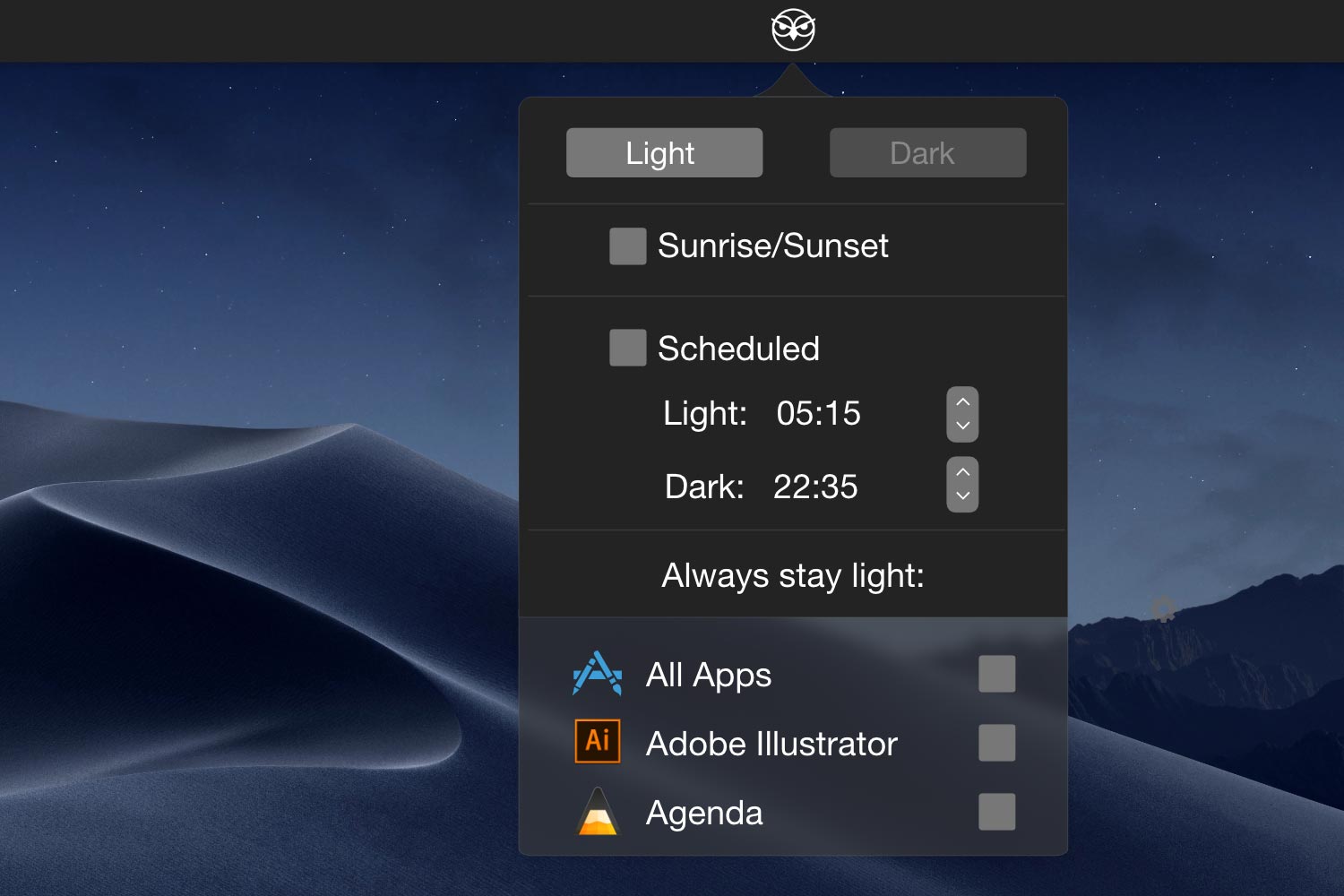
NightOwl will toggle the Dark/Light Modes based on your chosen time. You only have to set it up once, then it will run in the background.
Want your Mac to be in Dark Mode during night and switched back to Light Mode, when the sun rises? NightOwl does the work for you.
It only takes you a second to switch between Mojaves Dark/Light Modes by using the Hotkeys. Press, "Huuhuuhhh", dark. - that easy
This consumption behavior relies heavily on dopamine loops. When a user experiences a narrative climax, a humorous punchline, or a visually stunning sequence, the brain releases dopamine. This neurochemical response reinforces the desire to repeat the behavior, driving the phenomenon of binge-watching and infinite scrolling. The Spectrum of Modern Pleasure Content
From a neurological perspective, modern popular media functions as a variable reward system. Social media algorithms track user engagement down to the millisecond. By analyzing watch time, likes, shares, and re-watches, these systems curate a highly specialized feed unique to each user.
However, it would be reductive to condemn all pleasure-driven popular media as inherently corrosive. At its best, entertainment provides genuine catharsis, stress relief, and community bonding. A shared love for a film franchise or a hit song can bridge cultural and political divides. The key distinction lies in the nature of the pleasure offered. Active, engaged entertainment—solving a puzzle in a complex video game, debating the themes of a prestige drama, or learning a skill from a YouTube tutorial—involves agency, challenge, and subsequent satisfaction. This contrasts sharply with passive, consumptive pleasure—the mindless scroll, the autoplayed show watched out of boredom, the celebrity gossip that leaves no intellectual residue. The former enriches the self; the latter merely anesthetizes it. The critical challenge for the modern consumer is not to reject popular media but to become literate in its mechanics, learning to distinguish between nourishing engagement and empty calorie consumption.
141k +
27k+
6.3M +